Monday, June 17, 2013

WE WALK BY FAITH ( 2 Corinthians 5:7)

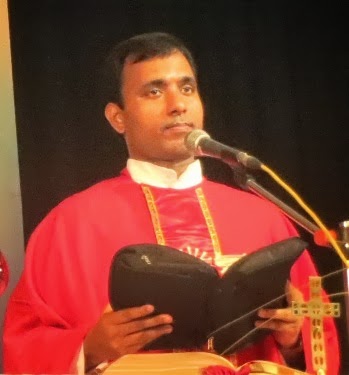
Rev. Fr. Augustine Vallooran V.C.


Senses dominate the world of knowledge today. What counts is what can be seen, heard and touched. Anything beyond the reach of the senses is considered uncertain and as of no consequence to human life. As a result, God, and all things spiritual for that matter, have totally lost significance in human thinking and striving. Everything to be known and to be reached is below the sky. The strident call of Frederick Nietzsche that “God is dead” and the assertion of Karl Marx that “religion is the opium of the people,” are extreme examples of atheism in the modern times. Pragmatic philosophies tend to affirm that all that matters is a pleasurable and successful worldly life, at once dismissive of all objective standards of truth and morality. Relativism is idealized and it is come to stay as a way of thinking and a style of living. Since all direction for life is rejected and nothing further is there to attain beyond this world, there is a “craze” driving man to be satiated with momentary pleasures and gains that the senses offer. Hence the mad race to stuff one’s heart with whatever can be grabbed from the world around.

The momentous question to ask and answer at this juncture would be, ‘Wherefore this frenzy and what is it leading man to?’  A certain nihilistic trend and senseless anonymity have come to dominate man's thinking depriving it of meaningfulness. Man has driven himself into the depths of despair as at no time ever before in history. So much attained, yet so little is achieved with life bereft of all meaning. The closer nations have come together thanks to science and technology, the further apart, man is drifting away from his neighbour. Many have begun to wonder whether humankind has lost its way.  There is an unspoken longing in every heart to transcend this world of matter and be set on pilgrimage to attaining the realm of the spirit.

“Why Do You Labour For That Which Does Not Satisfy?” (Isaiah 55:2)  


Some months ago I was talking to a young man who after a depraved life led for years, came to realize that he had reached a dead end. He felt oppressed by an overwhelming sense of life having lost all meaning for him. Even while at school, he could avail plentiful money and friends to spend with. He bothered little about his studies, except that close on the eve of exams he would learn his lessons by memory and scrape through every year. After passing school, he joined his father's business which gave him unlimited access to money. He made free with it and took to a life of loose, reckless living. He married a girl of his choice and after the arrival of a child, he had sent them away home to her place because he had fallen for another woman. He had also developed a habit and an addiction to drinking. Meanwhile, the family's business was faring poorly and went from bad to worse and he became desperate. It was then that he experienced a fatigue - a tiredness of life itself. Listening to his narrative, it was evident to me that this was a life wasted in the pursuit of momentary sensual satisfaction and lowly indulgences. It was a life sans purpose and motivation, with little God-sense and scant regard for values. He was the perfect type of the modern man - disoriented, directionless and without a vision in life. Cooped up in the world of the senses and turned away from the world of the spirit, man stoops to stuff himself with the crap that this world dangles deceptively before his eyes.

I discussed with him the futility of life lived on a mere mundane level of material existence. With all the earthly goods that he could possess, he remained empty and dissatisfied. He needed to rise above the trappings of the world and come to value human worth in terms of the value of the spirit, for the pure and simple reason that the human is imperishable in nature. It is in reaching out to God and homing in on Him that one discovers life's truest meaning. While on this point, he admitted to feeling inclined at times to turn towards God but had adamantly resisted it. He stayed to attend the full course of the retreat and he in the Grace of God was offered a life transforming experience of God’s real Love

The life-story of this young man holds a clue for us to gauge what is the malady of the world today and how God is waiting to free us with His offer of an effective salvation. When we rise above the senses and reach out to God, we will find God's Hands reaching out to us in love.
The Bible is the story of people who refused to be satisfied with what the material world could give and took the leap of faith secure into the arms of God. Abraham gathered courage to abandon and go without all the securities of this world to pursue single-mindedly the Word of God. That did not make his life any easier but it was transformed to such glory that he became a blessing to the humankind. A whole race of those who trust in God came out of him as he is the father of all believers. God’s Promise was fulfilled - “I will make of you a great nation, and I will bless you, and make your name great, so that you will be a blessing… by you all the families of the earth shall bless themselves.” (Genesis 12:2-3).


 “Whoever Drinks Of The Water That I Shall Give Him Will Never Thirst” (John 4:14)

Faith indeed is a leap made possible not at all because of what we can see with our eyes but because of what vision we hold in our heart. What our senses may offer us a touch realistic but it has no absoluteness. But then comes the Call from Above to leave the limits of the senses and reach further beyond. Reason cannot compel us to this. But it is a Call from within that impels us to take the plunge.


The Samaritan woman in the Gospel of St. John offers us a classic example of such a leap of faith (John Chapter 4). This person was living life by her understanding of security and fulfillment. Offering herself to man after man only left her as empty as the jar she was carrying to the well. She thought this was all that was there to life - small contentments, transitory pleasures and securities. That is when she met the Lord by the well of Jacob. Christ offered her a new way of life in the fullness and leading of the Holy Spirit.  He promised the Living Waters which alone could quench her thirst. She must have been attracted no doubt, by this new offer but would have been too scared to leave the framework of security she had worked out for herself. She sought to converse with Jesus bringing up irrelevancies like the cultural and religious differences between Jews and Samaritans wanting to digress from the real point. Jesus brought her back to focus on what the thirst of her heart was. He revealed to her that this could only be quenched when she let go of her sinfulness and reached for the offer of holiness. It was at this point that she left her water jar at the feet of Jesus. This was symbolic of her decision to abandon her past and take up the offer of Jesus, trusting her future in the Hands of God. From being a woman of loose morals, she is radically transformed into a missionary to the town proclaiming that Jesus is the awaited Saviour of the world. She took a definite stand for God and this option to abide by conviction made her an icon of faith to inspire generations of seekers! We are in the Year of Faith. The Church challenges us to be icons of the faith in a world that has chosen to bury its head in earth's sands, refusing to look up to God.

“If We Endure, We Shall Also Reign With Him” (2 Timothy 2:12)


The gospel records an instance where Jesus praises the faith of a woman. This was a woman of pagan origin - who had a daughter afflicted by an evil spirit. She came pleading with Jesus that He heals her. At the outset, Jesus seems indifferent to heed her desperate intercession. Even the disciples expressed sympathy for the misery of this woman and recommended her case to the Master - “Send her away, for she is crying after us.” (Matthew 15:23)  But the response of Jesus was anything but heartening to this woman.  "I was sent only to the lost sheep of the house of Israel… It is not fair to take the children's bread and throw it to the dogs” (Matthew 15:24,27). Hard as the words of Jesus might have sounded, she refused to give up. She knew she could not claim His kindness as a matter of course. After all, she was a pagan. But in Christ she recognized her salvation. She relentlessly pursued the Lord, “Yes, Lord, yet even the dogs eat the crumbs that fall from their masters' table” (v. 27). At this point Jesus turns to honour her, “O woman, great is your faith! Be it done for you as you desire” (v. 28).


This event highlights for us the real meaning of faith. Faith requires us to abandon our lives and needs to God's Hands. Man cannot set God's timetable or give ultimatums for God to act. Once we leave our destiny in the Hands of God, we wait in prayer for God’s Will to be done. Whatever thoughts may assail us questioning God’s ways, we are determined in rejecting such thinking - confirming our trust in the love of our God. A believer understands that God’s Plan is incomparably superior in every respect to human plans. It might appear that God does not care or understand the urgency of the situation. Even in such moments, the believer unwaveringly awaits God’s intervention. There has to be the definite, hard-intended refusal on the believer's part to opt out of God's scheme of things because God is Infinite Goodness.   Faith is the unfloundering commitment of love to God. It will not be disheartened; having to wait on Him because there is the certainty in the heart's depths that God will never fail us because we are precious to Him.

“A Wise Man Built His House Upon The Rock” (Matthew 7:24)


 I remember speaking to a young man, an engineering graduate who was well employed in a reputed firm. While flourishing in his profession, he felt the Call of God to priesthood.  He made his parents aware of it. They were very upset as he was their only child. They had different dreams for him. They had great hopes that he would make it big in life and support them in their old age. They tried to dissuade him from his decision by pointing out to him that he was already set on a trail of success and that stepping aside to follow a religious vocation would be foolhardy and that he would surely regret it one day. They also said that he would not be able to take all the sacrifices that religious life would involve. They finally also warned him of the possible dangers relating to scandals which circulated about certain religious men.

None of these arguments would undo his decision and he would not be dissuaded. What he felt was an irresistible call in his heart to give his life to Jesus. In a gentle way, he pointed out to his parents that it was businessmen who calculate and make decisions because their concern was to make profit. His decision was not based on any calculations, but on a deep experience of God calling him to His service. The only security for his future was in the faithfulness of the One who calls him. That security, he assured his parents, was greater than what any human system can ever give. This conviction of the young man was proof indeed of his integral faith which was founded on the sure ground of God. It is this faith that moves mountains, banishing doubts and uncertainties and advancing us to the secure heights of Divine Providence.  

Let Us Pray

O Lord our God how tremendous and unchanging is Your Love for us, the work of Your Hands. You created us in Your great Love. You drew a Plan for our lives even before we were conceived in our mother’s womb. What You have prepared for us is indeed beyond what any eye has seen, or ear has heard or what our heart could ever ask or imagine. Your Power and Glory is so great - nothing can come in the way of this Plan You have decided on for us.

Lord we have failed to trust in You and we built our lives on shifting sands. Today we turn to You, seeking Your Mercy and Your Power to sanctify us that our eyes may be opened to realize that You are the Way, the Truth and the Life. You are the one Reality we can trust on and turn to in every moment of our weakness. Even when we are unfaithful, You remain faithful. In Your Love is, indeed, our strength and our song of praise. Lord Jesus, we trust in You.


Amen.

Friday, June 7, 2013

IN GOD's SERVICE - DIVINE's SPECIAL 2013 ANNUAL RETREATS


DIVINE'S ANNUAL RETREAT & FORMATION FOR SPIRITUAL LEADERSHIP OF PRIESTS, RELIGIOUS & LAY LEADERS IN MINISTRY
21 - 26 JULY 2013

DIVINE'S ANNUAL INNER HEALING RETREAT
FOR PRIESTS
22 - 27 SEPTEMBER 2013


It is the YEAR OF FAITH -  is your vocation or ministry thriving in the Abundance of God’s Grace?

Are you truly experiencing God in your ministry and in your life?

Are you bringing a God-experience to others through your ministry?

Have you taken the time to sit at the Feet of Jesus and listen to Him to guide and empower you? 


“We must revive in ourselves the burning conviction of Paul, who cried out: 
"Woe to me if I do not preach the Gospel" (1 Cor 9:16)…This passion will not fail to stir in the Church a new sense of mission, which cannot be left to a group of "specialists" but must involve the responsibility of all the members of the People of God. Those who have come into genuine contact with Christ cannot keep Him for themselves, they must proclaim Him. A new apostolic outreach is needed, which will be lived as the everyday commitment of Christian communities and groups…Let us go forward in hope!”
-Blessed Pope John Paul II


Listen to your heart and respond to God’s gentle invitation! 


Come and be a part of...

DIVINE's RETREAT & FORMATION FOR SPIRITUAL LEADERSHIP of Priests, Religious & Lay Leaders in Ministry (English)


21 July 2013, Sunday 6.00 p.m.
to
26 July 2013, Friday 2.00 p.m.


Directed by

Rev. Fr. Augustine Vallooran V.C.
Director - Divine Retreat Centre


Do click on the link below to read Rev. Fr. Augustine Vallooran’s inspirational Homily during the Annual Priests, Religious & Lay Leaders In Ministry Retreat on 14 July 2011:


Rev. Fr. Joseph Edattu V.C.
Asst. Director - Divine Retreat Centre


Retreat Fee:
INR300/- (with local food)
INR1,000/- (with non-spicy food)

Prior registration is NOT required


Please click on the link below:


“We write to you about the Word of life, which has existed from the very beginning. We have heard it, and we have seen it with our eyes; yes, we have seen it, and our hands have touched it… so we speak of it and tell you about the eternal life which was with the Father and was made known to us... so that you will join with us in the fellowship that we have with the Father and with his Son Jesus Christ in order that our joy may be complete.” 
(1 John 1:1-4)


------------------------------------------------------------------------------


DIVINE’s ANNUAL INNER HEALING FOR PRIESTS (English)


22 September 2013, Sunday 6.00 p.m.
to
27 September 2013, Friday 2.00 p.m.


Directed by


Rev. Fr. Mathew Naickomparambil V.C.
(Spearhead Divine-Potta Ministry)
Rev. Fr. Augustine Vallooran V.C.
Rev. Fr. Joseph Edattu V.C.


Retreat Fee:

INR400/- (with local food)
INR1,000/- (with non-spicy food)


Prior registration is NOT required


We request your help to share these special Divine Annual Retreats information with your family, friends and ministry members who are serving the Lord. 


For more details. Please contact:
Rev. Fr. Augustine Vallooran V.C.
DIVINE RETREAT CENTRE
Muringoor P.O., Chalakudy, Kerala – 680 309
Tel: (91) 480 2708098, (91) 480 2708193
Fax: (91) 480 2708097
E-mail: divineretreatcentre@gmail.com


For more information on Divine Retreat Centre's news and activities and on Divine TV, please do visit our website: www.drcm.org


Monday, May 13, 2013

“I WILL POUR OUT MY SPIRIT ON MY SERVANTS” (Acts 2:18)

Rev. Fr. Augustine Vallooran V.C.


-         


A lot of people staggering through life in the moments of their desperation ask the question “Who is there for me to sort the problems of my life? Who can I count on in the difficult moments? Who will stand by me in the dark days?”  A similar question was asked by the three women heading to the tomb of Jesus early that Easter morning: “Who will roll the stone for us?” They reached the venue with this great burden in their heart when to their great surprise they found there the stone rolled back. Jesus was raised to life in glory!


In the early Church, the Resurrection was the theme of their discussions - the quest of their mind and the seeking in their intense prayer - Who broke the seal of the tomb and raised Jesus to life? St. Paul in answering this also explains how relevant this is for everyone of us, “If the Spirit of Him who raised Jesus from the dead dwells in you, he who raised Christ Jesus from the dead will give life to your mortal bodies also through his Spirit which dwells in you.” (Romans 8:11) It is the Holy Spirit who entered the broken lifeless body of Jesus and raised Him up in glory. St. Paul continues to say that this activity of the Holy Spirit was not confined to Jesus alone but for everyone united with Him who will be raised similarly to a new life. The key to sharing in this glory of Christ is that we must be united with the Lord. St. Paul confirms this as he writes that for this activity of the Holy Spirit to be realized in us, we must “die with Him” in order to be raised with Him. “If we have died with him, we shall also live with him.” (2 Timothy 2:11)

The mystery of our life in Christ is being revealed here.  More than our human endeavour to obey what is commanded and reject what is prohibited, Christian life is a joyous proclamation of what the Holy Spirit does in us at every moment. The Spirit of God breaks us from bondage to the culture of death to the liberation of a new life in Jesus.

“Sanctified By The Spirit For Obedience To Jesus Christ” (1 Peter 1:2)

St. Peter testifies to this offer in an experience of love. His own life was transformed from the grief of failure to the great joy of being forgiven by the merciful look of the Master. After having denied Jesus, he was sitting in the corner, his soul languishing in guilt and fear. In this moment of desolation, St. Luke describes that Jesus turned and looked at Peter (Luke 22:61). This look conveyed to him the assurance of forgiveness and the offer of a new life in the Holy Spirit. Looking into the eyes of Risen Lord, Peter would solemnly declare - Lord, you know everything; you know that I love you more than anything else.” (John 21:16-17) From then on, his life became a response to the love he experienced in the depth of his heart.


This life of commitment to Jesus was strengthened by the anointing of the Holy Spirit on the day of Pentecost. With this testimony of his own life, he declares in his first sermon - “God raised him up, having loosed the pangs of death, because it was not possible for him to be held by it… Thou wilt not abandon my soul to Hades, nor let thy Holy One see corruption” (Acts 2:24,27). Peter continues to tell the people to surrender their own lives to God in faith and thus receive the same Holy Spirit. “Repent, and be baptized every one of you in the name of Jesus Christ for the forgiveness of your sins; and you shall receive the gift of the Holy Spirit. For the promise is to you and to your children and to all that are far off, every one whom the Lord our God calls to him.” (Acts 2:38- 39)

St. Peter makes it clear to us how to receive the Holy Spirit and lead a new life in Him. As Jesus offered Himself to the Plan of the Father - “becoming obedient unto death, even death on a cross” (Philippians 2:8) - we need to surrender our lives totally to God. This surrender will take us in ways we never charted and cannot always make sense of.

“The Spirit Of The Lord Shall Rest Upon Him” (Isaiah 11:2)

Ever since Jesus was anointed by the Holy Spirit by the river Jordan when He was baptized by John the Baptist, the Power of the Holy Spirit continued to strengthen Him. In fact as He entered into the world in human form, He had made a commitment to the Father, "Here I have come to do thy will, O God.” (Hebrews 10:5-7)  Carrying out the purpose for which He was sent into the world was paramount in His heart that He would declare - “My food is to do the will of him who sent me, and to accomplish his work” (John 4:34). All that He did and said was by the unfolding of the Father’s will for Him. “I do nothing of myself; but as my Father has taught me, I speak these things.” (John 8:28)


This firm commitment to the Father was challenged when He was kneeling and sweating blood at Gethsemane. For a moment, He became so tense that He thought that the Father’s Will was an impossible destiny. Jesus stood breathless at the thought of being crucified and buried. In Gethsemane, He threw Himself on the ground pleading with the Father, seeking an alternate way. He “began to be greatly distressed and troubled… and fell on the ground and prayed that, if it were possible, the hour might pass from Him.” (Mark 14:33-35) However at one moment in the comfort of the Messenger of the Father, He surrendered Himself to the Father’s will, “not what I will, but what Thou wilt.” (Mark 14:36)

Once he made this total surrender he got the strength of the Holy Spirit and told the disciples “The hour has come; the Son of man is betrayed into the hands of sinners. Rise, let us be going.” (Mark 14:41-42)  From that time on, He never wavered from the path of the Father, even when His Body was subjected to extreme torture, He fulfilled the prophesy as the Suffering Servant of God - “He was oppressed, and he was afflicted, yet he opened not his mouth; like a lamb that is led to the slaughter, and like a sheep that before its shearers is dumb, so he opened not his mouth-” (Isaiah 53:7)  When He was betrayed and pushed away by His disciple into the hands of the executors His soul did not resent this, rather He held Judas as a friend. When He was condemned most unjustly by Pilate, he did not condemn the judge rather found an argument to justify Him - “You would have no power over me unless it had been given you from above; therefore he who delivered me to you has the greater sin.” (John 19:11)

The thieves crucified alongside Jesus also reviled Him, challenging Him to save Himself and them. However He did not retort or defend Himself rather He continued to exude graciousness. When one of these thieves recognizing His divinity turned to Him, Jesus took him to Paradise with Him. In the midst of extreme cruelty, He did not for one moment allow His Heart to be contaminated by self-pity or anger. Goodness and love burned in His Heart so powerfully that He was able to pray for all those who persecuted Him, “Father, forgive them; for they know not what they do” (Luke 23:34)  The anointing of the Holy Spirit remained in full strength in His Heart after He surrendered Himself to God’s Will at Gethsemane. Not for a moment did His Heart give in to despair or hate!

“To Set The Mind On The Spirit Is Life And Peace” (Romans 8:6)


At Gethsemane when He was freshly anointed by the Holy Spirit at the moment of His total surrender to the Father, three things seemed to have happened to Jesus.

Firstly, the Holy Spirit revealed to Him the whole truth of His Passion and Death. Earlier He had said that the Holy Spirit is the Spirit of Truth leading us to the whole truth (John 16:13). The whole truth of any event is the place it has in the Plan of God which is always for our welfare. In His tension and turmoil, His human heart was clouded and He could not understand why He had to go through this horrific path. This was why He was asking His Father for a way out of it. However He was given the revelation though He had known it all the time, that the Cross was for the salvation of the humankind as the Father had planned it. Once the whole truth was revealed, His Heart was never disturbed even when the most atrocious would happen to Him. Hence He could tell Simon Peter who drew the sword to cut the ear of Malchus, “Shall I not drink the cup which the Father has given me?” (John 18:11)  He accepted every moment of the pain not from any human hand but from the Hand of His Father. Therefore, He was able to plead forgiveness for those who broke Him - because ultimately they were not responsible.

Second, the Holy Spirit anointed Him with “Power from Above”, as He had explained the function of the Holy Spirit strengthening man in his struggle to be faithful to God. “I send the promise of my Father upon you; but stay in the city, until you are clothed with power from on high.” (Luke 24:49)  The natural human reaction to the heinous betrayal and unjust condemnation and cruel Crucifixion would have been anger and despair. However in the midst of inhuman cruelties, Jesus kept the Love and Goodness of the Holy Spirit flowing incessantly from His Heart to all around - dispelling the darkness of hatred to transform Calvary into the venue of love unparalleled.

Third, the Holy Spirit comforted Him in what should have been the deepest hour of anguish and mindless suffering. Even when none of His own was there to comfort and defend Him, He stood in the strength witnessing to the Presence of God. At the Last Supper, He had already been assured of His Father’s comforting presence - “You will be scattered and will leave me alone; yet I am not alone, for the Father is with me.” (John 16:32)  In the warmth of this comfort, He could reach out to others even in the torturous path to Calvary. Though burdened by His Cross, He comforts the grieving women of Jerusalem (Luke 23:27-28). Hanging on the Cross, He comforts John and His Mother, entrusting them to each other.

“I Can Do All Things In Him Who Strengthens Me” (Philippians 4:13)

I remember talking to a lady who came for the retreat. She was in deep distress because she was pregnant, carrying the fourth child. As soon as the husband came to know this, he shouted at her asking her to abort the child. He blamed it all on her saying that she should have known better and avoided the pregnancy. In her distress she confided with her mother who consoled her and encouraged her to keep the baby. However at the insistence of the mother-in-law, the husband threatened to divorce her if she did not consent to go for the abortion.

She was terribly confused about the decision she had to make. On the one hand, she had to save the marriage by consenting to the husband’s condition. Certain times it occurred to her that the husband perhaps had a point since she herself was working full-time as a teacher and he was often away on business tours. Why to bring a baby to the world if she could not give the necessary attention and love? On the other hand, she felt a terrible pain in her heart when she thought of killing the baby growing in her womb.


I advised her that the decision she had to take should not be based on feelings and emotions, or practical reasoning but on the Plan of God for her. The Word of God clearly tells us that the fruit of the womb is the gift of the Lord (Psalm 127:3). The baby is conceived in her womb not by human decision but by God’s decision to bless them with a child. This child is a heavenly blessing and not a mistake or miscalculation to be struck off. I persuaded her that above all circumstantial and personal inconveniences, she had to make a commitment to God’s Will. Once she surrenders her life in the Hands of God, God will take charge and anoint her with the Holy Spirit. She asked me whether the husband would abandon her, for then it would be impossible to bring up the children. Moreover if the mother-in-law is displeased, she would make her life miserable at home. I told her that these are wrong questions and such preoccupations should not influence her decision. I told her to repeat the prayer of Mother Mary, “Here am I, the handmaid of the Lord; let it be to me according to your word.” (Luke 1:38)  Mother Mary became the Handmaid of the Lord by making the Word of God the rule of her life and God’s Plan the destiny of her living. It was with her assent to surrender to God’s Word for her that the Holy Spirit could overshadow her and fulfill God’s supreme plan of salvation through her life.


In prayer, this lady retreatant was able to make a decision to keep the baby. I assured her that once she has made a commitment trusting in the faithful love of God, He will turn everything to her good. I quoted to her the promise in the scriptures, “We know that in everything God works for good with those who love him, who are called according to his purpose.” (Romans 8:28)  I spoke to the husband on the phone and prayed for him. When she returned home, the husband did not speak to her for a few days, resenting her decision. However she was able in the Comforting Power of the Holy Spirit to show him a lot of love and affection. The mother-in-law was terribly irritated at what she termed as arrogance and selfishness. Still the lady gave birth to a baby boy who soon became the apple of the eye of everyone in the family.


Very often what the Lord asks of us may seem unreasonable and beyond our strength. It is easy to opt for human suggestions and manipulations to opt out of the way the Lord calls us to follow. But life in all its fullness comes our way only when we set ourselves to follow the Lord. The promise is given to us that the Holy Spirit will enable to understand and to fulfill the Plan of God.

Let Us Pray:

O Lord God, we praise You for Your Love is faithful and You never abandon us. You gift us Your own Spirit to strengthen, comfort and guide us in the Way of Truth. Lord in all the moments of our life where we were crippled by grief and fearful of our helplessness, reveal to us in the Power of Your Spirit, that You are with us and will see us through our trials to accomplish Your Superior Plan for our happiness.

Lord, we surrender our life situations, plans and solutions. With Mother Mary we pray, “Let it be done to us according to your Word.” Anoint us with Your Spirit that we shall in the confidence of Your Presence live our lives according to Your Plan and be channels of Your Peace and Love.

Amen.

Thursday, April 18, 2013

“MERCY TRIUMPHS OVER JUDGMENT” (James 2:13)

Rev. Fr. Augustine Vallooran V.C.


During a conference, a young man confronted me with a question, "Who or what is the God you believe in?" I replied him, "Jesus, the Good Shepherd." Those who were listening to me were young entrepreneurs - a group of very ambitious and successful business people. They belonged to different religious persuasions and some of them were even agnostics. They had invited me to lead them in their search to know God a little closer. The theme of the seminar was, ‘The Relevance Of God In The Contemporary Competitive World’. When I mentioned Jesus, the Good Shepherd, they were very interested. How could a shepherd have any relevance in this modern age? I explained to them that this was a title that Jesus wanted us to know Him by. As the Good Shepherd, He would leave the ninety-nine sheep in the wilderness in order to search out and rescue the one lost sheep. It was the lost one that needed the shepherd more urgently. Feeling the pain of loneliness and estrangement of the lost sheep, He goes out risking all that He had even His life to search it out.
 

“If We Are Faithless, He Remains Faithful” (2 Timothy 2:13)

During my explanation, a young lady cynically remarked, "Your God is an unjust God. How can He leave the faithful majority of the flock to the dangers of the wilderness with its wild beasts and go in search of a single sheep that did not care to stay with Him any way? He definitely is a poor leader - for He should have known better that His responsibility was towards those who remained with Him and not towards the one who did not care for him." I replied that it was possible that my God may be a poor leader, but He definitely is a great lover. His love is so personal that He will not let any one of those who belongs to Him to perish. That is the mission of His Heart. The sad truth is that leadership today is looked at as a selfish endeavour of pleasing the majority to get support and applause. Individuals who are not able to fall in line with the policies of the majority, because of their personal history, will be wounded and estranged in the process. They do not matter for the leaders. Such individuals will be even looked at as a threat because the principle generally accepted is that those who are not with you are against you. Potential threats will not be tolerated by "effective" leadership. I continued to explain to them that my God knows every one personally - as He said that even a hair falling from our head is counted (Matthew 10:30)
 
Even in the moments when I fail Him by my unfaithfulness I could still count on Him to be there for me and not against me. A long discussion followed in which many were impressed by my proposal. Yet they confessed, “We can never imagine that God having the power to have His Way should tolerate our vagaries without an inclination to punish us!” The Mercy of God was still beyond their comprehension. Deeply rooted in their minds was the idea of the Justice of God. As God is the creator and guarantor of the system of "right" and "wrong", He has to set the system right by punishing the wrong. The necessary consequence is that when I do something wrong, I had to pay back for the sake of the system of morality. Such thinking breeds fear. Then the natural tendency in my mind is to interpret every thing bad happening to me as a punishment of God. Fear causes rebellion and despair. God is looked at as a threat to happiness and welfare of human life. Agnosticism is the offshoot of such untrue concoctions of the human mind on the Divine Reality.
 

“How Can I Give You Up?” (Hosea 11:8)

In the Bible there is a progressive revelation of the Mercy of God. When the people of God were painfully struck by their own unfaithfulness to the stipulations of the Covenant that God had made with them, they were frightened of God's wrath. They interpreted every disaster and misfortune that occurred to them as Divine interventions to punish them and teach them a lesson. But in time, their eyes were opened with the great events of God's salvation. Salvation was not what they deserved for they had violated the Covenant by their unfaithfulness. Yet the Lord God intervened for the one purpose of their salvation. The Hebrew word ‘hesed’ used in this context has much significance. The word indicates a profound attitude of 'goodness'. In the Old Testament, the word occurs always in connection with the Covenant that God established with His people.
 
 
In accordance with the Covenant, God promises to be faithful to His people by protecting and saving them. However the people had to be also faithful to the Covenant by obeying its stipulations. This was the Justice of God. According to this Divine justice, God's commitment to the Covenant would cease when the people strayed away from Him and the Covenant. But precisely at this point, the transcendent meaning of God's 'hesed' was manifested as Mercy - goodness greater than justice. As Pope John Paul II explained well, "It showed itself as what it was at the beginning, that is, as love that gives, love more powerful than betrayal, grace stronger than sin" (Encyclical: 'Rich in Mercy').
The people realized that God's fidelity and love did not depend on their attitude towards Him. Through Prophet Isaiah God declared, "For the mountains may depart and the hills be removed, my steadfast love shall not depart from you, and my covenant of peace shall not be removed, says the Lord who has mercy on you." (Isaiah 54:10)  God, in showering upon them unmerited goodness, was simply faithful to His own nature, which was Unconditional Love. He exhorts the people through the Prophet Ezekiel, "Therefore say to the house of Israel: thus says the Lord God: it is not for your sake that I am about to act, but for the sake of my holy name." (Ezekial 36:22)  The prophets reminded the people time and again that, although they did not deserve the blessings of the Lord because of their infidelity to Him, they should trust in His Mercy.

 
Often in the Old Testament, the Mercy of God was contrasted with God's Justice, and in many cases was described to be more powerful and profound. Indeed mercy triumphs over justice in the sense that mercy conditions justice and justice serves mercy. Mercy became such an overwhelming experience of the Psalmist and the Prophets that the very meaning of the Justice of God was interpreted as the salvation accomplished by the Mercy of God. Promising Divine imminent intervention, God says, "Be attentive to me, my people... I will make my justice come speedily; my salvation shall go forth..." (Isaiah 51:4-5)  Through Prophet Jeremiah, God declares, "I have loved you with an everlasting love, therefore I have continued my faithfulness to you." (Jeremiah 31:3)  Thus the term 'hesed' highlights the fidelity of God to His own nature of love that flows into His people saving them. It corrects and transcends all human ideas of justice as a mere juridical concept. If anyone interprets the Old Testament references regarding Divine justice as if God's blessings would depend on our merit, it would only be a misinterpretation.

 “As A Father Has Compassion On His Son” (Psalm 103:13)

The fidelity of God expressed by the term 'hesed' is transcendently perfected by another term, namely, 'rahamim', used by the Old Testament to illustrate God's Goodness towards humankind. Its root is 'rehem', which means the womb of the mother. Hence 'rahamim' denotes the love of a mother. Through Prophet Isaiah God consoles His people, "Can a woman forget her suckling child, that she should have no compassion on the son of her womb? Even those may forget, yet I will not forget you." (Isaiah 49:15)  By using the analogy of motherly love to illustrate God's attitude to man, the Bible emphasizes the completely gratuitous nature of Divine Love. Mother's love flows out of an exigency of her heart. It springs forth as an interior necessity, not depending at all on the response of the child. Indeed when the children are incapable of a response due to indifference, mistrust, sickness or sinful attitudes, the heart of the mother goes out to them all the more powerfully.  By this analogy the motherly characteristics of tender affection, infinite patience and constant forgiveness are attributed to the Love of God. Through Prophet Hosea God assures, "I will heal their faithlessness, I will love them freely". (Hosea.14:5)
 
The New Testament completes and perfects the revelation of the Old Testament. Jesus reveals the mystery of Divine Mercy in an unparalleled manner. The words of Jesus become beautifully eloquent while conveying the tender care and loving concern of 'Abba' to his children. "How much more does He care for you?" is a question that penetrates our hearts whenever we hear it from the mouth of Jesus. The mercy of the Heart of God is described with great precision in the parable of the prodigal son (Luke 15: 11-32). The profound drama played out between the father's love and the son's waywardness reveals in clear light the whole mystery. By welcoming the son with open arms and restoring him to the right, dignity and honour of sonship with a joyous celebration, the father has gone beyond all norms of justice. This precisely was the objection of the elder son. The elder son, though he was always with the father, could never understand the inner content of the father's heart. The parable clearly points to those who claim to be religiously faithful, but have not been blessed to experience the Mercy of the Heart of God.
Through the bold and profound teaching of the Divine Mercy, the Church in recent times has been exhorting the faithful to contemplate this mystery revealed in the Sacred Scriptures and live it in their personal as well as communitarian lives. A deep understanding of this mystery will take away all the fear and anxiety that mar the happiness of the modern man. To know that there is a God who cares and loves , irrespective of my virtue and sin, success and failures, gives confidence and stability to my consciousness

“As I Have Loved You, You Also Must Love One Another” (John 13:34)


Human relationships are to be moulded in the perspective of the Mercy of God. When one experiences profoundly the unconditional Mercy of God, one will not be able to condemn others - no matter what was done. If relationships are strained and family life is disrupted, it is because the hearts are not "rooted and grounded in the love" (Ephesians 3:17) with which we are loved by God.
 
I remember speaking to a young lady who was in the process of applying for a divorce. The reason was that the husband was discovered talking frequently on the mobile phone to a lady colleague in a rather intimate manner. The husband, realizing the mistake, cut off the unholy relationship during a retreat. But the wife could never understand or accept why he had cheated on her. I prayed for her after having listened to her story completely and suggested to her that she should ask pardon from the husband for the unfortunate turn of events in the marriage. She was furious and shouted at me, “Do you know what you are talking? For his mistake, is there any sense or justification for me to ask pardon from him? It is he who must pay for his sin. That is why I want to divorce him so that the whole world would know what type of man he is.” I told her that she was far away from the mind of God, and her response to his sin is ungodly and would definitely be displeasing to God. She has a responsibility to save him and that would be possible only if she becomes humble before him in love. She retorted, "What justice are you talking about? He humiliated me enough by being unfaithful to me, and now you want me to be humiliated further before him". I told her that what I was suggesting is beyond all norms of human justice. No court of law in any country would tell her this. Only Jesus would give this to her as a command, because His Love goes beyond all stipulations of worldly justice. He washed the feet of Simon Peter who denied Him and of Judas who betrayed Him, and of all the disciples who abandoned Him. He was washing away their sin. Thus it was an act of mercy that saved them. After the washing of the feet, Jesus gave this to his disciples as a command. "If I then, your Master and Teacher, have washed your feet, you ought to wash one another's feet. I have given you a model to follow, so that as I have done for you, you should also do." (John 13:14-15)  It took a long while to convince her of this higher version of God’s saving love.
 
 
The only way to enter the kingdom of God is to understand the mystery of the Mercy of God and live it out in life. Jesus said, “If your righteousness does not transcend that of the Pharisees and scribes, you will not enter the kingdom of God.” But when we dare to open our eyes to this unconditional love of our God, whose only intent is to save us, we shall become instruments of His salvation and goodness to our families and to this world.
Let Us Pray
God of Mercy and Compassion, how blessed we are to be redeemed by Your Love. We failed You by our sinfulness and we failed You all the more by refusing to see Your Mercy that was ever reaching out to receive us. Today O God, we place into Your Hands, our lives, our failures and our endeavours to be right before You. Cover us in Your Love. Hold us close to Your Heart and bind our wounds of unfaithfulness and loneliness. 
As Your Love flows into our heart, we commit ourselves to live this Mercy, to bless those who broke and to bow down before those who trample us. For we know, O God, then shall Your mission of defeating evil and saving this world shall be accomplished. 
Jesus, we trust in You. 
Amen